
Parks & Beyond · Article 1
Amusement, Entertainment and Leisure: 3 Businesses, Not 1
 Shirish Deshpande · 5 November 2026
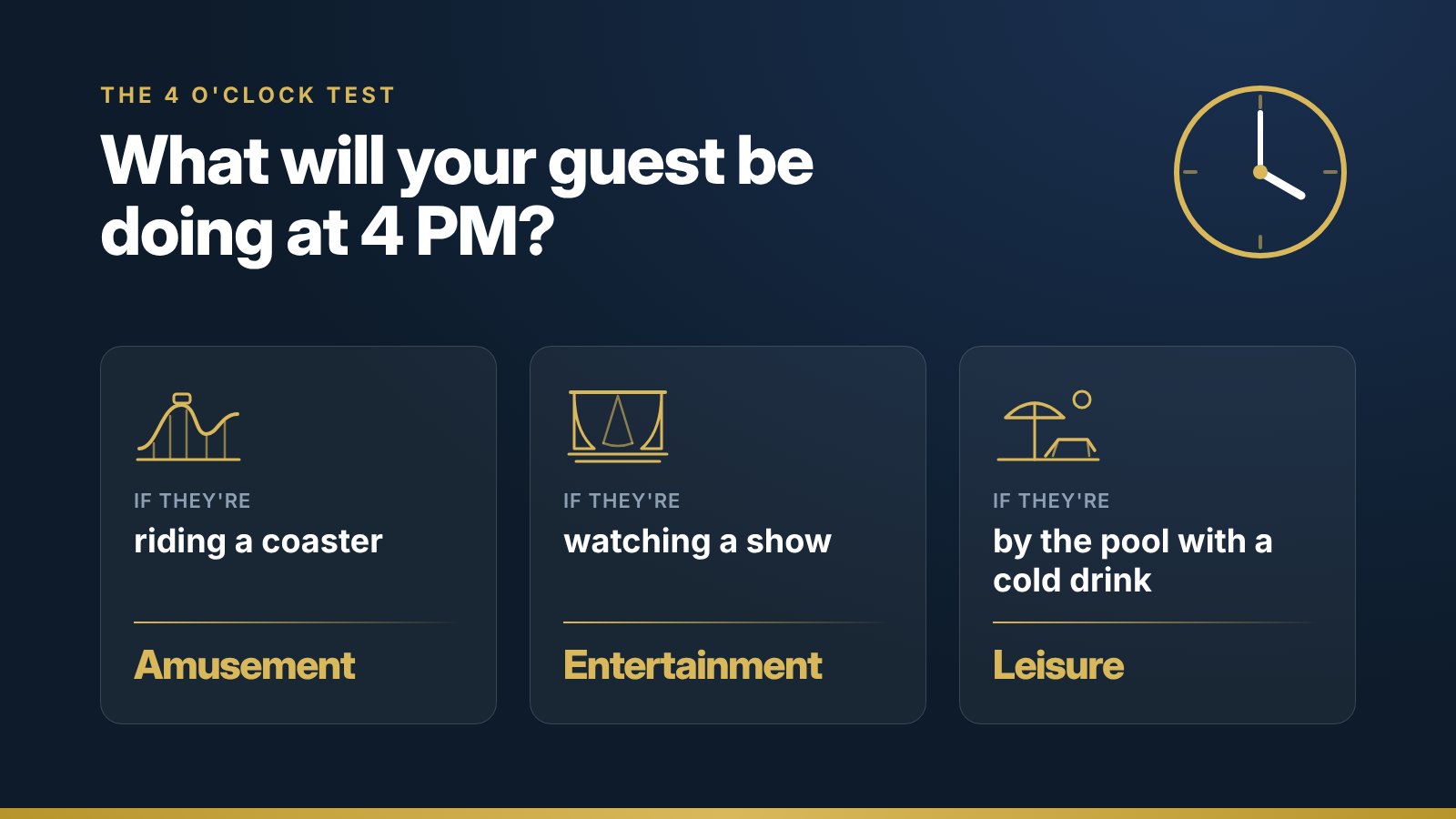
When a developer tells me he's building an "entertainment destination", I ask him one question. What will your guest be doing at 4 o'clock in the afternoon?
If the answer is "riding a coaster", it's an amusement business. If it's "watching a show", it's entertainment. If it's "sitting by the pool with a cold drink", it's leisure.
We use these 3 words as if they mean the same thing. They don't. And mixing them up shows up later in the ride mix, the pricing, the staffing and the numbers investors are shown.
The words already tell you
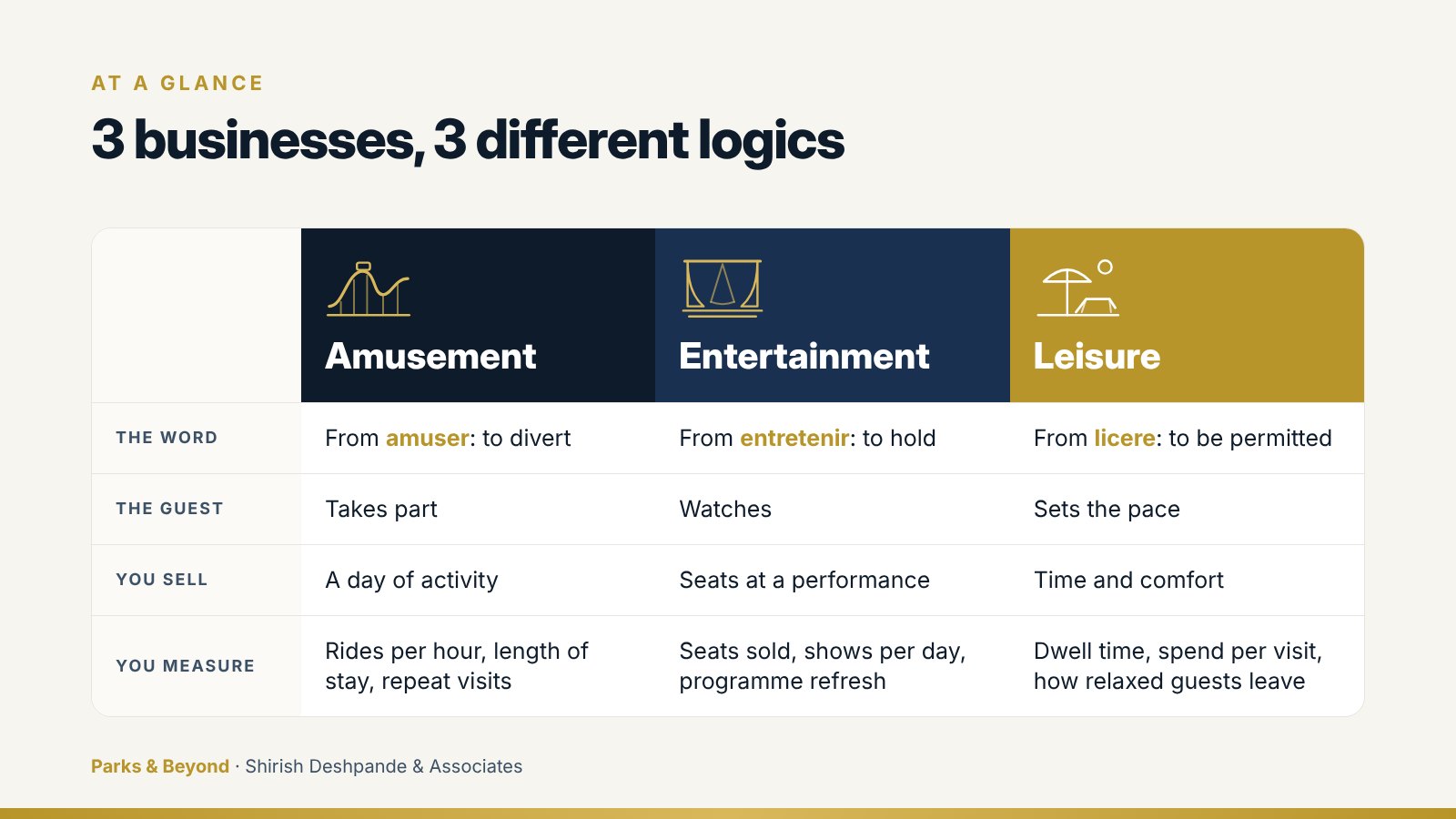
"Amuse" comes from the French amuser, which first meant to divert someone's attention. "Entertain" comes from entretenir, to hold. "Leisure" goes back to the Latin licere, "to be permitted": time that's yours.
Divert. Hold. Permit. 3 ideas, and 3 different businesses.
Amusement: the guest takes part
Amusement parks, water parks, family entertainment centres, go-karts, trampoline parks. The guest rides, slides, climbs and queues again.
You're selling a day of activity, so the questions are practical. How many rides fit into the day? How long are the queues? Is there enough shade and food in between?
You measure it in rides per hour, length of stay and repeat visits.
Entertainment: the guest watches
Cinema, live shows, concerts, stunt shows. Someone else performs, and the guest sits back.
You sell seats, not rides, and capacity is set by show times. The big long-term cost is content. A ride can run for 20 years. A show that never changes can feel stale within a couple of seasons.
You measure it in seats sold, shows per day and how often the programme is refreshed.
Leisure: the guest sets the pace
Resorts, clubs, malls, promenades, spas. Nobody tells the guest what to do next.
You're selling time and comfort: shade, clean washrooms, food when they want it, a reason to stay one more hour.
You measure it in dwell time, spend per visit and how relaxed people feel when they leave.
Why mixing them up costs money
Most projects combine all 3. A water park has a wave pool, a DJ on the pool deck and cabanas for the afternoon. That's fine. The trouble starts when nobody decides which one leads.
- The rides are built for thrill seekers, but the marketing promises a relaxed family day. Families find little for grandparents and small children, and don't come back.
- A show is added, but it isn't timed to the crowd flow. Instead of easing the queues, it empties the food outlets at the busiest hour.
- A leisure destination is judged on footfall, when the real money was in getting each guest to stay longer.
- Investors are shown amusement park numbers for what is really a leisure project, and the case never adds up.
These aren't design problems. They're definition problems. They start in the first meeting, when someone says "entertainment" and everyone in the room hears something different.
Decide which business leads. Everything else follows.
Especially in India
Indian projects mix all 3 more than most. Water parks come with resorts, malls add gaming zones, theme parks add hotels and banquet halls. Land is expensive and travel takes time, so a destination that fills a whole day has a better chance of justifying the trip.
That makes the question more important here, not less.
Try this on your own project
Write down the 3 words. Next to each, note what a guest is actually doing in that part of your site, and for how long. Then ask which one earns most of your revenue, and which one brings people back.
The answer is usually clear within minutes. And it tells you where to spend, how to price and who to hire.
The guest never thinks in these categories. They just know whether they had a good day. Our job is to think in them, so they don't have to.
Next in Parks & Beyond: what actually makes an amusement park work.
Which of the 3 is your business really in?